


Exercise for Stress Reduction
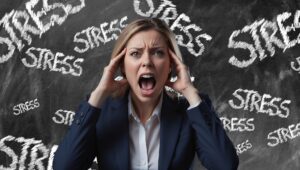
Most people rate reducing stress as a top health goal. Not only does lowering stress make life more pleasant, but it also has health implications.
Stress and anxiety, regardless of their cause, affect general mental well-being, blood pressure, cognitive function including memory loss, reduce the ability to fight infections, and even speed aging.
Doctors have prescribed exercise as a stress buster. Does the evidence support using exercise to lower stress?
Yes, within limits and specific applications.
Aerobic or cardiovascular exercise is key. Distance exercise, performed for 30+ minutes, is a stress reducer for several reasons. The time spent exercising allows the body to dispose of negative chemicals from stress, like adrenaline or cortisol. Exercise level, just below the burn threshold, is best for most people. Think of this in rate of perceived exertion terms, cruise control, like 60 mph in your car, is 6/10 on the effort scale. If you feel burning in the muscles, back off the intensity/effort/speed just below that level. And that level is also more than positive for blood pressure control.

What about sprint training? Anything above that and high-intensity exercise elevates those stress compounds more than lowers them. However, some people prefer the specifics of a high-intensity exercise option, like a group cycling class. Here, it may not be the cycling that is providing the mental benefit, but the constant shifting of effort in response to exercise leader instructions and the music. For those people, the effort to keep up with the musical cadence takes them away from daily life, even if only for two minutes. It is a content against yourself.

What exercise form? Any type of distance exercise is positive, with an edge to outdoor walking because of the visual impact of the trail, surrounding and changing scenery on engaging the brain. To a degree, this applies to nordic skiing and cycling. In the winter, or in your specific situation, that may not be possible. With indoor exercise, the first consideration is what you will do for 20+ minutes without mental agitation. You may find a recumbent bike more tolerable than an upright bike. The rule here is to try everything so see what fits your individual psyche preferences. If you become bored with one thing, or the muscles get fatigued, try the 3 x 10+ minutes program. Spend 10 minutes on a piece of equipment, then move to two more pieces for the remainder of the 30 minutes.
Hit the button. When you start the exercise session, note that this is your time. Disconnect from phone calls, emails, and even conversations. Only you, your body, and movement remain. That psychological reset is a stress reducer.
Set a specific time. Each person’s exercise routine varies in timing and efficacy. While personal, busy people can dedicate more time early in the day over after work. After dinner at home does not work well for most people because exercise ups physiological arousal, making getting to sleep difficult. On a blood lipids note, a 15 minute walk after dinner does lower blood fats or triglycerides without amping up your general, physical state.
Is more better? To a degree, yes, extending the endurance exercise to 45 minutes has even better results, from mental to physical changes. For example, in a long aerobic session, you burn more fat as fuel as time goes on. A plus in weight loss or maintenance. And a longer session, like a four-mile walk, will have a greater chance of negating those stress chemicals.
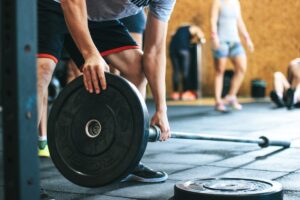
Resistance training and stress. Here the evidence is that resistance training, especially performed at a reasonable level to build or maintain strength, is more a stress producer than a reliever. The reason is that the compounds and metabolic processes used in weight training elevate general physical levels. Weight training is an anaerobic or sprint event with recovery periods between sets. A few exercisers employ resistance training for stress reduction when personal connections link psychological effects to the demands of lifting weights. Here, the outlook/focuse and intensity of exercise combine for mental diversion. However, for most exercisers, this will at best have no effect on stress. Cardiovascular exercise, as noted, should be the dominant exercise option in the rotation.
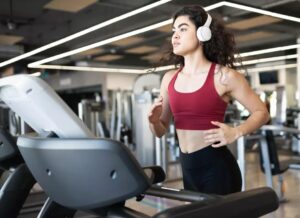
Keep the mind occupied. Television or music engages the mind during exercise. More recent research showed exercisers worked a little harder and longer when listening to their favorite music. The balance here is to occupy the mind and pass the time, not elevate the intensity past that 6/10 level unless that is the goal. For example, listening to music may prompt increasing a machine’s speed or walking faster when a fast song plays. A key is matching the beat of the music to the physical pace and demands of the exercise. Does the type of music matter? Regarding the effects on brain function, the answer is simply a matter of preference. And, have a backup you can use every so often to avoid sound boredom.
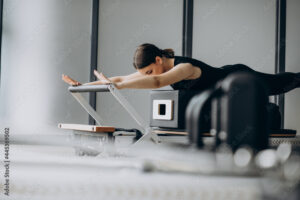
Slow-paced and deliberate results. Pilates and yoga fall within the popular category of “mind-body” exercise, where the exerciser must engage the mind to move through the progression. Here, the stress reduction comes from connection with each new movement. Mind/body techniques, while effective for stress reduction, do not get to the full range and measurable benefits of traditional strength and cardiovascular exercise. These techniques offer limited fitness benefits, only producing minor changes in the dominant areas trained. For example, in Pilates, there is a significant load on the core, thus benefiting the abdominal and back areas. In this sense, they are secondary to the known prescription/recommendation of 3-4 aerobic sessions and 2 resistance sessions per week on a broad range of fitness factors.
The eye of the exerciser. Not well-researched is the concept that what works depends somewhat upon expectations. If you expect to reduce stress and get connected with exercise, you are more likely to do so. It is not immersion followed by results; this is where the reset button comes into play. Your time, your exercise, and your results. Once you make that connection, the exercise will have a better chance of working. My experience in exercise physiology is that it takes new exercisers two weeks to try various forms, find what they like, and start the association train connecting.
Select references
Churchill R, Teo K, Kervin L, Riadi I, Cosco TD. (2022). Exercise interventions for stress reduction in older adult populations: a systematic review of randomized controlled trials. Health Psychology and Behavioral Medicine, 10(1), 913–934. https://
Delleli S, Ouergui I, Ballmann CG, Messaoudi H, Trabelsi K, Ardigò LP and Chtourou H (2023) The effects of pre-task music on exercise performance and associated psycho-physiological responses: a systematic review with multilevel meta-analysis of controlled studies. Front. Psychol. 14:1293783.
Terry PC, Karageorghis CI, Curran ML, Martin OV, Parsons-Smith RL (2020) Effects of music in exercise and sport: A meta-analytic review. Psychol Bull. 2020;146(2):91-117.
Yamamoto T, Ohkuwa T, Itoh H, Kitoh M, TerasawaJ Tsuda T, et al. (2003). Effects of pre-exercise listening to slow and fast rhythm music on supramaximal cycle performance and selected metabolic variables. Arch. Physiol. Biochem.111, 211–214.
Malagodi F, Findon JL, Gardner B, Dommett EJ. (2025). A Systematic Review of the Effectiveness of Physical Activity Interventions for Improving Mental Health and Wellbeing in University Students. Journal of College Student Mental Health, 1–37.
Huang W and Wong TL (2025) Exercise prescriptions for young people’s emotional wellbeing: a systematic review of physical activity intensity, duration, and modality. Front. Psychol. 16:1552531.
Daré LO, Bruand PE, Gérard D, et al.(2019) Co-morbidities of mental disorders and chronic physical diseases in developing and emerging countries: a meta-analysis. BMC Public Health. 2019;19(1):304. PubMed PMID: 30866883; PubMed Central PMCID: PMC6417021.
Davis K, Goodman SH, Leiferman J, Taylor M, Dimidjian S. (2015) A randomized controlled trial of yoga for pregnant women with symptoms of depression and anxiety. Complement Ther Clin Pract. 2015;21(3):166–172.
Zhu D, Ma X, Fan H and Yuan Q (2026) Do clock-in for physical exercise in campus help in building undergraduate exercise habits? Evidence from undergraduates in Henan, China. Front. Public Health 14:1844179.
Liu J, Wang H, Lan Y, Yuan D, Du B, Zhou Y, Zhang W, Ke XW, Jiang Q, Wang F, Cao S, Sun J. (2026) Comparative Efficacy of Exercise Interventions for Anxiety Disorders: A Bayesian Network Meta-Analysis. Psychol Res Behav Manag. 2026;19:570270
Yue Li, Jiaxing Tang & Gaopeng Chen. (2025) The Effect of Meditation-Based Mind-Body Interventions on Older Adults with Poor Sleep Quality: A Meta-Analysis of Randomized Controlled Trials. Behavioral Sleep Medicine 23:3, pages 341-359.
Woodyard C. (2011) Exploring the therapeutic effects of yoga and its ability to increase quality of life. Int J Yoga. 2011;4(2):49-54.
Tran, MD, Holly RG, Lashbrook J, Amsterdam EA. (2001) Effects of Hatha Yoga Practice on the Health-Related Aspects of Physical Fitness. Preventive Cardiology, 4: 165-170.


