


Body Composition is More Important Than You Think!
BODY COMPOSITION IS MORE IMPORTANT THAN YOU THINK
Neil Wolkodoff, PhD
In the world of fitness and health, body composition has received more attention in the last five years. Should you be concerned about this measurement?
The answer is yes, for many reasons.
Body composition refers to the relationship between various soft tissues in the body and the weight of bone, fluid, and organs. In the case of fitness, you should be concerned with the amount of muscle and support tissue, like ligaments and tendons, compared to fat weight. Note: if you had no body fat, you would be dead. There is essential body fat, such as 3%, and some bodybuilders can achieve this level. This is usually expressed as a ratio or as a percentage of how your body fat compares to your total weight. This percentage is an excellent indicator of potential health status and fitness results.
Body composition, no matter how you measure it, is much better than Body Mass Index (BMI). BMI is calculated by dividing a person’s weight in kilograms by the square of their height in meters. It classifies people as underweight, normal, overweight, and obese. Recent research has shown that this number is not the end-all in terms of what you weigh or what should be a healthy weight.
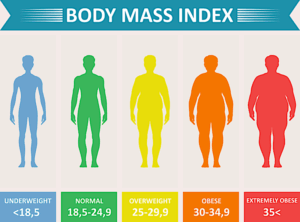
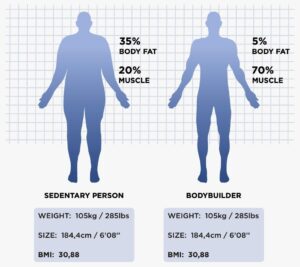
What’s the issue? Muscle is significantly heavier per volume measurement than fat due to its distinct tissue composition and higher water content. Two people can be the same “size,” yet the muscular person could weigh 10-40 pounds more in terms of their muscular weight. BMI does an abysmally poor job of dealing with muscle mass in active and athletic populations.
Just because your BMI is “normal,” that could mean that under the surface, you have more fat and less muscle than is optimal for your age. The relationship of BMI to health is moderate at best, and it does not account for the effects of activity on the ratio of fat to muscle. And, most of that relationship is due to the fact that as one gets heavier, activity and exercise diminish, negatively affecting health. Two people of the same weight can have very different body compositions based on the amount of muscle and lean tissue versus fat. BMI does not tell this story.
As one ages, there is a normal loss of muscle, a condition known as sarcopenia. You can weigh the same from age 41 to 67, yet have your body fat percentage increase due to the normal loss of muscle and metabolic slowing.
Enter weight training, the magic bullet for getting your muscles back. The research clearly demonstrates that cardio training has almost no effect on building muscular mass. At best, it might result in less muscle loss as you age. And even the result of maintaining muscle mass with aerobic training is iffy at best. Studies on competitive cyclists do not support the notion that they have not gained more than normal muscle mass, but rather that they have increased efficiency and aerobic power.
If body composition is a better measurement, what is the best way to get a measurement? Some physiological accuracy is essential. All the “measurement” options out there are technically scientific estimations. Why? The gold standard for measuring body composition is to dissect the body after death, weigh all the tissues, and determine the ratio of muscle to non-muscle tissue, also known as non-essential fat. That’s a one-time test that does not allow for repeated measurements. Over the last 40 years, various methods have been compared to dissection and weighing in this regard. Some are better than others, yet the point is they are reasonable estimations, not rock-solid measurements.
Here are some of the standard measurement types in use for body composition:
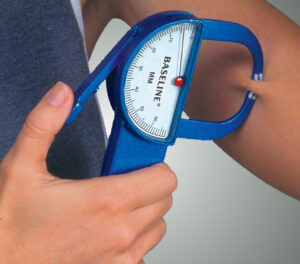
Skinfold calipers. There is a strong correlation between subcutaneous fat and overall body fat. By pinching fat in 3-7 sites, a reasonable estimation of overall body fat can be provided. In the hands of a trained tester, this is very accurate. Trained means they have performed hundreds of tests and have undergone education, such as that from the American College of Sports Medicine.
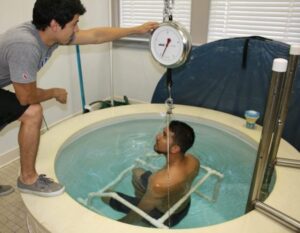
Underwater weighing. This works on the relationship between the density of fat, muscle, and hard tissue. You compare the weight on land with the weight in the water when you let all the air out. That weight change results in an overall density compared to water, which is then translated into a body fat percentage. Letting the air out is key, so unless you are comfortable holding your breath underwater, this method is less accurate than others.
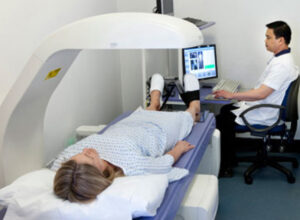
DEXA scan. These scans were initially designed to assess bone density, a crucial factor in maintaining healthy aging. The scan can identify different types of tissue and has reasonable differentiation between fat and muscle. The density numbers are converted into a total body composition score, and provide some guidance on where muscle is located. However, this method is no better than any other in terms of results. Moreover, machines are costly at $100,000 and large in size. Difficult to find space in the gym, and the software that performs the calculations varies from one machine brand to another. Additionally, the machine requires periodic re-calibration to ensure accuracy. A considerable amount of trouble and expense yields results that are essentially the same as those of any other method.
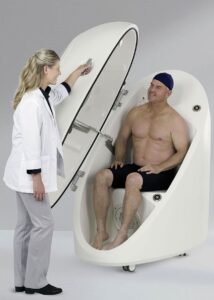
Air Displacement Plethysmograph (ADP), also known as The Bod Pod. Using air, weight is compared to volume to determine a density value. Similar to underwater weighing, a higher density indicates more muscle, while a lower density suggests more body fat. It simply compared volume versus weight to arrive at a density number. Similar to underwater weighing, this method provides a total body composition measurement. It does not predict or indicate muscle mass in specific segments, such as the legs.
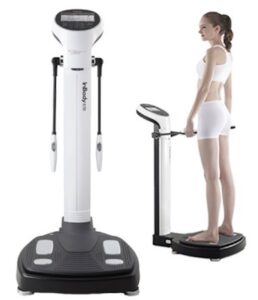
Bio-electrical impedance. Here, the principle is fat, with less water, conducts a minor electrical impulse differently than muscle, which has more water. Contact points on standing units are the arms/hands and feet. The current passes through, and both resistance and conductivity are calculated. Three major brands use a standing machine where the person holds the contacts and then steps barefoot on the contacts. The drawback of standing machines is that they lose accuracy for individuals who are very overweight, as water tends to pool downward around the legs. Additionally, the contacts are positioned against the bony surfaces of the hands and feet, which do not conduct electricity well. While not thoroughly researched, evidence suggests that people with diabetes and those with poor leg circulation may experience leg pooling of water during this test, which can further interfere with accurate results.
 There are two reputable manufacturers of supine systems, where the person lies flat on their back. No pooling of water on the legs, so with specific populations, it is much better than the standing options. The current can actually pass through the skin and muscle, rather than the bony parts of the hands and feet. It is not a scale, so weight must be measured beforehand and plugged into the equation.
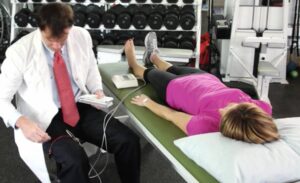
All the machines in this category aim to target specific muscle groups, such as arms/legs/torso. In actuality, the difference between muscle and other lean tissues is so slight that the composite measurement is lean tissue, or in this case, muscle plus tendon and ligament. Extrapolating to determine how much muscle is in a segment, such as the right arm, is a scientific stretch. However, that number can be a strong indication of where the person needs more emphasis in weight or resistance training.
That aside, they provide total body composition results that are reproducible. I was involved in a study where one of the supine systems was compared to a DEXA, and the results were almost identical.
Testing conditions? This really matters!
-First thing in the morning, minimal fluid, no food.
-No exercise that morning, as this can really disrupt the water level, especially with electrical impedance techniques.
-Another factor is tissue rebuilding and distress. 24-48 hours after resistance training, the body enters a repair mode. More water and fluid in the muscles also disrupts accuracy, best after a day off from exercise.
-And it depends upon the tester, as the setup in any method is essential. Someone who is trained and has a base MA/MS degree in the field is likely to perform better on a test than a personal trainer who conducts only one test every week or two. And that person will have far more knowledge in how to interpret the results into an action plan.
Remember, these scientific “measurements” are targeted estimates, not precise measurements. In that light, they can help you determine your health and fitness status, as well as the types of exercise and focus to improve both vital areas.
References
Cintra-Andrade JH, Ripka WL, Heymsfield SB. Skinfold calipers: which instrument to use?. J Nutr Sci. 2023;12:e82. Published 2023 Jul 20. doi:10.1017/jns.2023.58
Beam JR, Szymanski DJ. Validity of 2 skinfold calipers in estimating percent body fat of college-aged men and women. J Strength Cond Res. 2010;24(12):3448-3456. doi:10.1519/JSC.0b013e3181bde1fe
Tagliafico AS, Bignotti B, Torri L, Rossi F. Sarcopenia: how to measure, when and why. Radiol Med. 2022;127(3):228-237. doi:10.1007/s11547-022-01450-3
Sergi G, Trevisan C, Veronese N, Lucato P, Manzato E. Imaging of sarcopenia. Eur J Radiol. 2016;85(8):1519-1524. doi:10.1016/j.ejrad.2016.04.009
Wu Y, Li D, Vermund SH. Advantages and Limitations of the Body Mass Index (BMI) to Assess Adult Obesity. Int J Environ Res Public Health. 2024;21(6):757. Published 2024 Jun 10. doi:10.3390/ijerph21060757
Haufs MG, Zöllner YF. Waist-Hip Ratio More Appropriate Than Body Mass Index. Dtsch Arztebl Int. 2020;117(39):659. doi:10.3238/arztebl.2020.0659a
Tseh W, Caputo JL, Keefer DJ. Validity and reliability of the BOD POD® S/T tracking system. Int J Sports Med. 2010;31(10):704-708. doi:10.1055/s-0030-1255111
Francis KT. Body-composition assessment using underwater weighing techniques. Phys Ther. 1990;70(10):657-663. doi:10.1093/ptj/70.10.657
Katch FI, Katch VL. The body composition profile. Techniques of measurement and applications. Clin Sports Med. 1984;3(1):31-63.
Ward LC. Bioelectrical impedance analysis for body composition assessment: reflections on accuracy, clinical utility, and standardisation. Eur J Clin Nutr. 2019;73(2):194-199. doi:10.1038/s41430-018-0335-3
Di Vincenzo O, Marra M, Di Gregorio A, Pasanisi F, Scalfi L. Bioelectrical impedance analysis (BIA) -derived phase angle in sarcopenia: A systematic review. Clin Nutr. 2021;40(5):3052-3061. doi:10.1016/j.clnu.2020.10.048
Moore ML, Benavides ML, Dellinger JR, Adamson BT, Tinsley GM. Segmental body composition evaluation by bioelectrical impedance analysis and dual-energy X-ray absorptiometry: Quantifying agreement between methods. Clin Nutr. 2020;39(9):2802-2810. doi:10.1016/j.clnu.2019.12.009
Blue MNM, Tinsley GM, Ryan ED, Smith-Ryan AE. Validity of Body-Composition Methods across Racial and Ethnic Populations. Adv Nutr. 2021;12(5):1854-1862. doi:10.1093/advances/nmab016


